


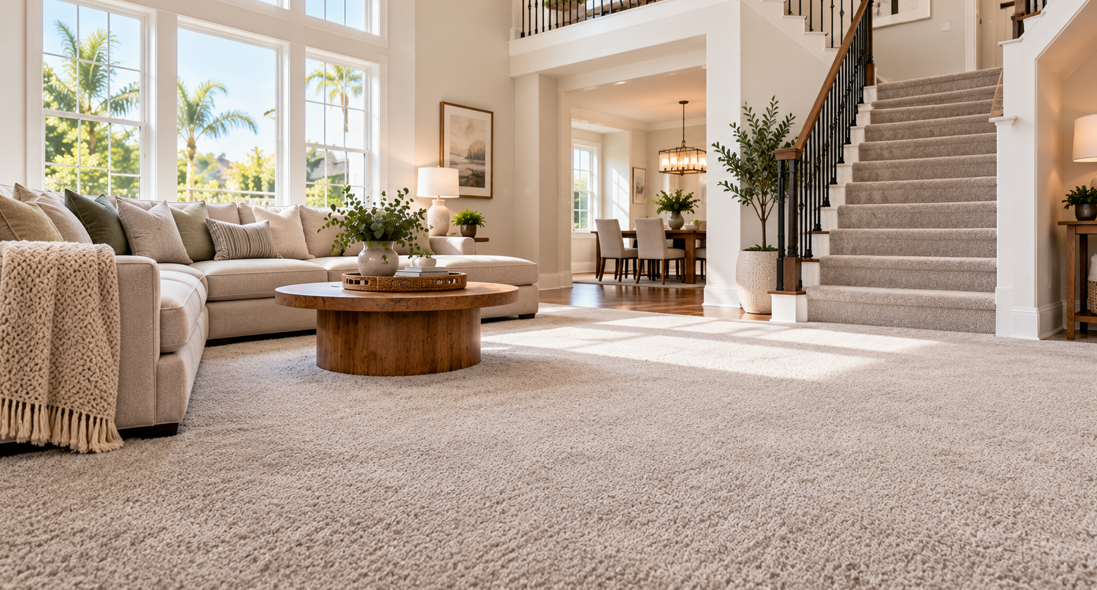
Two-story homes are a big part of what makes Parrish such a popular place to settle. New neighborhoods offer extra bedrooms, upstairs bonus rooms and plenty of space for growing families. The trade-off many homeowners notice soon after moving in is sound. Footsteps, rolling toys and late-night trips down the hallway travel straight through the floor and into the rooms below. At LG Kramer Flooring, our project guides help Parrish families choose carpet that brings calm back to the whole house, and our certified master installers make sure it performs the way it was designed to.
This guide explains why upstairs noise happens, how carpet reduces it and which choices make the biggest difference.
Why Two-Story Homes Get Noisy
Most new construction around Parrish is built quickly and efficiently, which keeps homes affordable but often leaves little sound control between floors. Upstairs subfloors are usually wood panels over joists. When someone walks across a hard surface on that panel, the impact vibrates through the structure and the ceiling below acts like a drum.
There are two kinds of noise to think about:
Impact noise: footsteps, dropped items, chairs scraping and pets running. This is the sound that travels downward.
Airborne noise: voices, music and television. This bounces around a room and leaks through doors and stairwells.
Hard flooring tends to amplify both. Carpet softens both, which is why it remains such a popular upstairs choice.
How Carpet Absorbs Sound
Carpet works as a cushion and a sponge at the same time. The pile and the pad below it absorb the energy of each step before it reaches the subfloor, so far less vibration reaches the ceiling underneath. The fibers also soak up airborne sound inside the room, which cuts echo in bedrooms, playrooms and open lofts.
The result is a home that feels quieter and more relaxed on both levels. Parents can put little ones down for a nap upstairs while the rest of the household carries on below, and work-from-home spaces stay focused.
Choosing the Quietest Carpet
Not every carpet offers the same level of sound control. A few details make a real difference.
Pile Height and Density
Denser carpet absorbs more sound. A thick, tightly packed cut pile, such as a plush or a textured saxony, quiets footsteps better than a thin, loose construction. Frieze styles with longer twisted fibers also feel soft and muffle sound well, while hiding footprints in busy family rooms.
Fiber Type
Nylon, polyester and triexta fibers all perform well for sound absorption. The bigger question is how the fiber fits your lifestyle. Families with pets and children often lean toward stain-resistant options, while bedrooms can focus on softness. Our project guides walk you through the strengths of each so you can match the fiber to every room.
The Pad Matters as Much as the Carpet
Many homeowners focus on the carpet itself and overlook the cushion beneath it. For noise control, the pad is one of the most important pieces of the system.
Thicker, denser pads absorb more impact and reduce sound transfer to the rooms below.
Rebond and memory foam cushions offer a comfortable feel and strong sound performance.
Moisture-resistant pads add protection in our humid climate and help keep the carpet fresh.
Upgrading the pad is an affordable way to make a noticeable improvement, especially over bedrooms and nurseries on the first floor.
Where Quiet Carpet Makes the Biggest Difference
In a typical two-story home, these areas benefit most:
Upstairs hallways: the busiest walking path in the house and often directly over living spaces.
Bonus rooms and lofts: play areas, game rooms and media rooms generate plenty of noise.
Kids' bedrooms: jumping, playing and dropped toys create constant impact noise.
Stairs: carpet softens every step and adds a layer of safety for little feet.
Primary bedrooms: soft carpet creates a calm retreat at the end of the day.
You can explore styles, colors and textures for each of these spaces on our carpet flooring page before you visit.
Carpet and the Florida Climate
Life in Manatee County comes with high humidity for much of the year, and summer storms during hurricane season keep many families indoors for days at a time. Upstairs carpet holds up well in this climate when it is paired with a quality pad and a well-run air conditioning system. Keeping indoor humidity steady protects the carpet backing and keeps fibers fresh.
Many local homes also have a slab foundation downstairs and wood framing upstairs. That combination is one reason so many families choose hard surface flooring on the ground floor and carpet on the second floor, enjoying easy-care floors where sand and outdoor traffic come in, with soft, quiet comfort above.
Installation Makes the Difference
Even the best carpet and pad will underperform if they are not installed correctly. Loose seams, poor stretching and gaps at the walls can lead to wrinkles, squeaks and wear. LG Kramer Flooring was founded in 2009 by Lance and Gianna Kramer, and Lance began his career as an installer at 16. Today our certified master installer teams complete over 500 installations a year across the region.
During installation, our team checks the subfloor for loose panels that cause squeaks, secures them where needed and stretches the carpet properly so it stays smooth for years. If your existing upstairs floors need removal first, we handle removal and disposal as well as furniture moving.
Caring for Upstairs Carpet
A few simple habits keep quiet carpet looking beautiful:
Vacuum hallways and stairs at least twice a week.
Use door mats at the entry so beach sand does not travel upstairs.
Blot spills quickly with a clean, damp cloth.
Schedule professional cleaning about once a year.
Bring Peace and Quiet Home
A quieter two-story home starts with the right carpet, the right pad and expert installation. Whether you are finishing a new build in Parrish or refreshing an upstairs that has grown noisy, our project guides can help you compare options side by side and plan every room. Book an appointment at our Lakewood Ranch showroom at 4735 Lena Road, Suite 103, or schedule an on-site measurement and estimate. Mohawk Synchrony financing is available, subject to credit approval. Get in touch today, or call (941) 401-0249, and let us help you enjoy a calmer, more comfortable home.


