


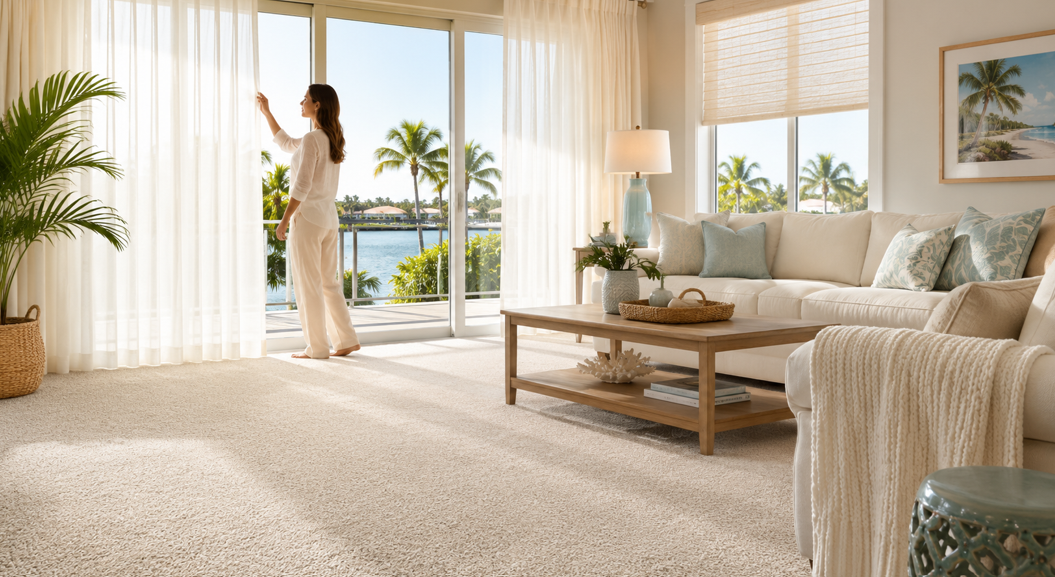
Why Florida Sunlight Deserves Attention When You Have Carpet
Bright natural light is one of the features many homeowners love about living in Bradenton. Large windows, sliding glass doors, open layouts, and sunny rooms can make a home feel warm, spacious, and connected to Florida’s outdoor lifestyle.
That same sunlight can affect interior finishes over time, including carpet.
Carpet fading is a gradual loss or change in color caused by extended exposure to light. The Carpet and Rug Institute explains that prolonged exposure to light sources, including sunlight, can cause carpet dyes to fade over time.
That does not mean carpet and sunny Florida homes are a poor match. It means homeowners can get better long-term results by considering sunlight when selecting carpet and by taking a few practical steps after installation.
At LG Kramer Flooring, homeowners in Bradenton and surrounding areas can compare carpet options based on more than color alone. Fiber, construction, room location, traffic, natural light, and everyday maintenance all contribute to how a floor looks years after installation.
If your home gets plenty of Florida sunshine, these strategies can help protect your carpet while still letting you enjoy bright, comfortable rooms.
1. Understand What Sunlight Can Do to Carpet
Carpet does not normally change color overnight because of sun exposure. The effect is generally gradual, which can make it easy to overlook until a covered and exposed area are compared.
Fading Can Develop Slowly
Sunlight entering through a window or glass door can repeatedly hit the same section of flooring day after day. Over time, the dyes in some carpet fibers may lose color or shift in appearance.
The Carpet and Rug Institute describes fading as a progressive color change associated with prolonged exposure to light sources. Its maintenance guidance also recommends protecting carpet from direct sunlight to help minimize fading and color loss.
The amount of visible change can vary significantly from one carpet to another.
Factors include:
Fiber type
Dye method
Carpet color
Intensity of light exposure
Length of daily exposure
Window orientation
Window treatments
Product-specific fade resistance
Age and condition of the carpet
That is why two carpets receiving similar sunlight may not age in exactly the same way.
Light Exposure Is Often Uneven
A room rarely receives sunlight evenly across the entire floor.
One strip of carpet near a sliding glass door might get direct afternoon sun, while another part remains shaded by furniture. A bedroom window may illuminate the same area every morning. In an open living room, sunlight may move across the floor throughout the day.
Over time, these differences can make exposed areas appear different from sections covered by furniture or rugs.
Thinking about where sunlight lands in the room before choosing carpet can make long-term care easier.
2. Use Blinds, Shades, or Other Window Coverings
One of the simplest ways to reduce prolonged direct sunlight on carpet is to manage the light entering the room.
Shaw Floors recommends using blinds, shades, or awnings to reduce periods of direct sunlight as part of preventative carpet maintenance.
That does not mean keeping a Bradenton home dark all day.
Adjust Coverings During the Brightest Hours
Pay attention to when particular rooms receive their strongest direct sunlight.
A west-facing family room may become especially bright later in the afternoon. Another room may receive stronger morning sun. Closing or partially adjusting blinds during those periods can reduce repeated direct exposure while allowing plenty of natural light at other times.
Useful options include:
Adjustable blinds
Roller shades
Cellular shades
Drapes
Exterior awnings
Layered window treatments
The best choice depends on the room, design style, and how much control you want over daylight.
Pay Attention to Sliding Glass Doors
Large glass doors are common in Florida homes because they open living areas to patios, pools, lanais, and outdoor spaces.
They can also create a broad path of direct sunlight across the flooring.
If the same section of carpet receives strong sunlight for several hours every day, consider a window treatment that can be adjusted when exposure is highest. This approach lets the room stay bright while giving the flooring some protection during the most intense periods.
3. Consider Sun Exposure Before Choosing Carpet
Sun protection begins before installation.
A carpet that will go into a shaded bedroom does not face exactly the same conditions as carpet beside a large glass door in a bright Bradenton living room.
When comparing products, tell your flooring professional how much natural light the room receives.
Ask About Fiber and Fade Resistance
Different carpet fibers have different performance characteristics.
For example, Shaw describes polyester as naturally stain- and fade-resistant and notes that some high-performance PET carpets are designed to withstand harsh sunlight. The manufacturer also describes polypropylene, also called olefin, as inherently stain- and fade-resistant, although it has different resilience characteristics than nylon or polyester.
Some individual carpet collections also include specific fade-resistance features. Shaw’s Pet Perfect line, for instance, states that its styles are designed to resist color loss and fading from sunlight.
These examples do not mean one fiber is automatically right for every sunny room. Traffic, softness, stain resistance, construction, pets, appearance, and maintenance all matter too.
The better approach is to compare the complete product specification against the conditions in your home.
Review the Product Warranty
Fade resistance can vary between manufacturers and collections, so take time to understand what a particular warranty covers.
Rather than assuming every carpet handles direct sunlight the same way, ask about:
Fade-resistance coverage
Warranty exclusions
Required maintenance
Cleaning requirements
Installation requirements
Product-specific limitations
This can be especially useful when the carpet will be installed in a room with significant natural light.
4. Choose Colors With Long-Term Appearance in Mind
Color is usually one of the first features homeowners notice when shopping for carpet, but sunlight gives that design decision another dimension.
There is no universal carpet color that is immune to visible change. How noticeable fading becomes depends on the carpet, dye system, exposure, and surrounding design.
Think About the Entire Room
Consider how the carpet color relates to:
Wall paint
Natural light
Furniture
Window treatments
Area rugs
Adjacent flooring
Morning versus afternoon lighting
A carpet sample can look noticeably different in a showroom than it does beside a sunny window at home.
Whenever possible, view samples in the room where the carpet will actually be installed. Look at them at different times of day.
A shade that seems warmer in morning sunlight may look cooler under artificial lighting in the evening.
Patterns and Texture Can Influence Appearance
A solid, uniform carpet can show visual changes differently from a textured, heathered, or patterned design.
Subtle color variation and texture can make everyday changes in appearance less prominent while adding dimension to the room.
If your Bradenton home has a particularly sunny room, discuss how different carpet flooring styles, fibers, colors, and constructions may perform in that specific space rather than choosing based only on a small sample.
The goal is to find a floor that works with the light, not against it.
5. Rotate Rugs and Move Furniture Occasionally
Furniture and area rugs protect the carpet underneath from direct exposure. That protection can be useful, but it can also create differences between covered and uncovered sections as the floor ages.
Imagine an area rug sitting in the same sunny family room for several years. The surrounding carpet receives daily light exposure while the carpet underneath the rug receives much less.
When the rug is eventually moved, the covered area may look different.
Change the Layout When Practical
You do not need to rearrange the entire house every month. Occasional changes can help reduce repeated exposure patterns.
Consider:
Rotating an area rug
Shifting smaller rugs seasonally
Moving lightweight furniture slightly
Changing the angle of a chair or small table
Adjusting window coverings as seasonal sunlight changes
Shaw’s preventative maintenance guidance also recommends occasionally moving heavy furniture to help prevent excessive pile crushing.
That means a thoughtful furniture refresh can support both the carpet’s surface appearance and more even light exposure.
Keep Carpet Beneath Rugs Clean
If area rugs sit over carpet, include the carpet underneath in your normal cleaning routine.
Shaw recommends cleaning area rugs regularly and restoring the carpet pile underneath them. It also advises allowing carpet to dry fully before replacing rugs following cleaning.
That helps the covered portion of the floor stay maintained rather than becoming an area homeowners rarely inspect.
6. Keep the Carpet Clean to Preserve Its Appearance
Sunlight is not the only factor that changes how carpet looks.
Soil, sand, traffic, crushed pile, and abrasion can make one section appear duller or lighter than another. In Bradenton, tracked-in sand and fine outdoor debris can add another source of surface wear.
CRI explains that abrasive particles combined with traffic can damage fiber surfaces and create appearance changes that may look like soiling even when cleaning alone cannot completely restore them.
Vacuum Based on How the Room Is Used
Entry areas and frequently used living spaces often collect debris faster than guest rooms or less-used bedrooms.
A consistent vacuuming routine helps remove particles before foot traffic repeatedly works them into the carpet.
Focus especially on:
Exterior entrances
Paths from patios and lanais
Hallways
Living-room traffic lanes
Areas near sliding doors
Spaces used frequently by pets
Entry mats can also catch sand and debris before they travel through the room.
Respond to Spills Carefully
Color change is not always caused by sunlight.
Cleaning chemicals, household products, spills, and improper spot treatments can also alter carpet color. Use care products appropriate for the flooring and follow the carpet manufacturer’s instructions.
If you are unsure about a stain or discoloration, professional guidance can be preferable to experimenting with multiple cleaners on the same area.
7. Know the Difference Between Fading, Wear, and Soiling
A light-looking patch near a window may appear to be sun fading, but appearance changes can have several causes.
Understanding the difference can help determine whether cleaning, repair, or another solution makes sense.
Fading
Fading involves a change or loss of color. Prolonged light exposure is one possible cause. CRI notes that both sunlight and other light sources can contribute to gradual fading.
Wear
Wear involves changes to the carpet pile through traffic and abrasion.
Repeated foot traffic can reduce pile density or change the way fibers reflect light, making heavily used areas look different even when the color itself has not faded.
Soiling
Soil can make carpet appear darker, duller, or uneven.
Fine particles may settle into the carpet, particularly along frequently travelled pathways and near entrances.
Pile Direction and Crushing
Carpet fibers reflect light differently depending on their direction. Areas where the pile has been compressed by furniture or traffic may therefore look lighter or darker from different angles.
If the cause of a color or appearance change is unclear, evaluating the carpet in person can help separate actual fading from maintenance or wear issues.
8. Protect Carpet in Your Home’s Sunniest Rooms
Not every room needs the same sun-protection strategy.
A north-facing guest bedroom with limited direct sunlight may need little attention, while a family room with floor-to-ceiling glass could benefit from several protective measures working together.
Living Rooms and Family Rooms
These spaces often combine large windows, high traffic, furniture, rugs, children, and pets.
Consider using adjustable window treatments and rotating area rugs periodically. Select carpet around both traffic demands and natural light conditions.
Bedrooms
Bedrooms may receive fewer hours of daily traffic, but sunlight can still fall on one section of carpet for years.
Look at where morning or afternoon light hits and consider how beds, dressers, and rugs affect exposure.
Home Offices
Furniture tends to stay in one position in home offices, which can create long-term differences between covered and exposed carpet.
Protect the floor beneath rolling chairs with a carpet-compatible chair mat, and pay attention to sunlight around desks and windows.
Rooms Opening to Patios or Lanais
These spaces combine sunlight with outdoor traffic.
Managing light, sand, moisture, and debris together can help the carpet maintain a cleaner, more consistent appearance.
9. Check Carpet and Window Conditions Periodically
Sun exposure is gradual, so a simple visual check every so often can help you notice changes early.
You do not need specialist equipment.
Look at areas:
Beside large windows
In front of sliding glass doors
Along the edges of rugs
Beneath movable furniture
In strong afternoon sunlight
Near exterior entrances
Compare exposed and less-exposed areas.
If there is a noticeable difference, changing how you use blinds or shades may help reduce additional exposure. A rug or furniture layout may also be adjusted where practical.
The aim is not to keep carpet looking untouched forever. Flooring is part of a lived-in home, and normal appearance changes happen over time. Preventative care simply helps the floor age more evenly and protects the investment you made in it.
Keep Your Bradenton Carpet Looking Beautiful in the Florida Sun
A bright home and beautiful carpet can absolutely work together.
The key is recognizing that repeated direct sunlight can influence carpet color over time. Window coverings, thoughtful product selection, appropriate maintenance, occasional rug rotation, and attention to the sunniest parts of the room can all contribute to a more consistent appearance.
For Bradenton homeowners choosing new carpet, consider sunlight before the floor goes in. Look at where the strongest light enters, how long it stays there, and how the room is used. Ask about fiber, construction, fade resistance, warranty coverage, cleaning, and installation rather than making the decision on color alone.
Existing carpet can benefit from the same practical approach. Adjust blinds during strong exposure, keep sand and grit under control, clean according to manufacturer guidance, and pay attention to changes around windows, rugs, and furniture.
LG Kramer Flooring has been helping Florida homeowners with flooring installation since 2009, with a focus on informed product selection, quality craftsmanship, and flooring choices that suit each client’s lifestyle.
If sunlight is a concern in your Bradenton home or you are planning a new carpet project, get in touch with the LG Kramer Flooring team to discuss options for your space.


