


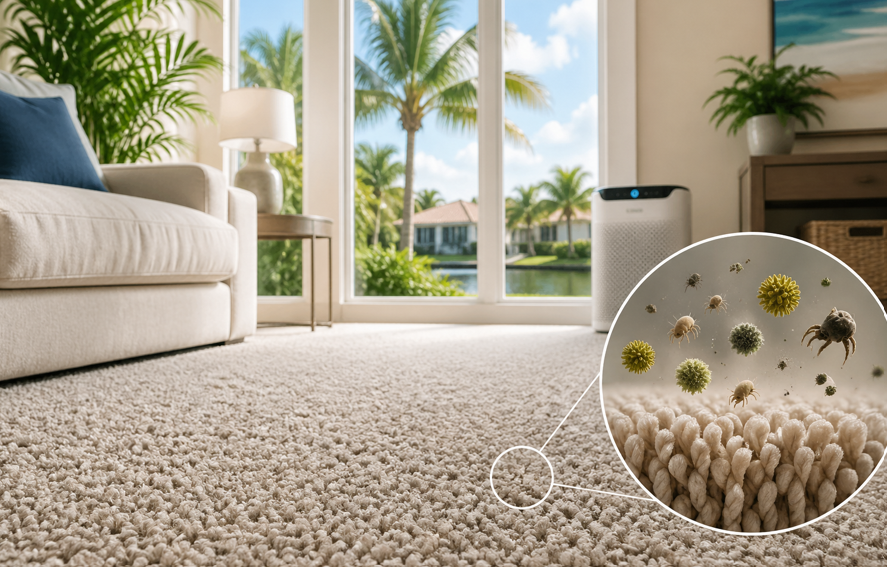
Why Indoor Air Quality Matters More in Florida Homes
Living in Florida has its perks—sunshine, coastal breezes, and beautiful homes. But the same warm, humid climate that makes the area so appealing can also create challenges inside your home. Indoor air quality becomes a bigger concern here than in many other regions, and it’s something homeowners often overlook until issues start to show.
Humidity plays a major role. When moisture levels stay high, it creates an environment where dust, allergens, and airborne particles can linger longer than they should. Over time, this can affect comfort, cleanliness, and even how your home feels day to day. You might notice musty smells, increased dust buildup, or allergy symptoms that seem to stick around.
Flooring is a key part of this equation. While most people focus on air conditioning or ventilation, what’s underfoot can influence how air moves and what stays trapped inside your home. Carpet, in particular, often gets a mixed reputation. Some assume it negatively impacts air quality, but the reality is more nuanced.
When selected and maintained properly, carpet can actually support a cleaner, more comfortable indoor environment. It works differently than hard surfaces, and that difference can be beneficial when understood correctly.
At LG Kramer Flooring, homeowners are guided through these decisions with a focus on comfort, performance, and long-term value. The right flooring choice doesn’t just transform how your home looks—it can also improve how it feels to live in every day.
How Carpet Interacts with Indoor Air Quality
Carpet doesn’t just sit on the floor—it actively interacts with the environment inside your home. Understanding how it works can help clear up common misconceptions and give you a better sense of its role in indoor air quality.
Carpet as a Passive Air Filter
One of the most overlooked benefits of carpet is its ability to act like a passive filter. Carpet fibres naturally trap dust, pollen, pet dander, and other airborne particles. Instead of these particles circulating through the air and being inhaled, they settle into the carpet until they’re removed through cleaning.
This means fewer irritants floating around your living space at any given time.
Airborne vs Settled Particles
Here’s where the difference becomes important. With hard flooring, dust and allergens remain on the surface. Even slight movement—walking, opening doors, or air flow—can send those particles back into the air.
Carpet, on the other hand, holds onto those particles. While that might sound like a drawback at first, it actually reduces the number of airborne contaminants. As long as the carpet is properly maintained, this can contribute to a fresher, more stable indoor environment.
Modern carpet options are also designed with improved fibre technology, making them easier to clean and more effective at holding onto unwanted particles until they’re removed.
The Impact of Florida’s Humidity on Carpet and Air Quality
Florida’s climate introduces one major factor that can’t be ignored—moisture. High humidity levels affect both air quality and flooring performance, and carpet is no exception.
Moisture and Mould Risk
Excess moisture can create the conditions where mould and mildew may develop. This is often the main concern people have when considering carpet in humid environments. However, the risk typically comes down to improper installation, poor ventilation, or lack of maintenance—not the carpet itself.
When moisture is controlled and the right materials are used, carpet can perform exceptionally well in Florida homes.
Why Professional Installation Matters
This is where expert installation makes a difference. Proper subfloor preparation, moisture barriers, and precise fitting techniques all help prevent issues before they start. A professionally installed carpet system is designed to handle environmental conditions while maintaining its integrity over time.
Working with experienced installers ensures that every layer—from the padding to the surface—supports both durability and indoor air quality.
Types of Carpet That Support Better Indoor Air Quality
Not all carpets are the same. The materials, construction, and finish all influence how they interact with your home’s air quality.
Low-VOC Carpets
Low-VOC (volatile organic compound) carpets are designed to reduce chemical emissions. These options contribute to a cleaner indoor environment, especially important in enclosed spaces where air circulation may be limited.
Hypoallergenic Carpet Options
Some carpet materials are naturally resistant to allergens and dust accumulation. These are ideal for households with pets, children, or anyone sensitive to airborne irritants.
Dense vs Plush Fibres
The density and structure of carpet fibres affect how particles are captured and how easy they are to remove. Denser carpets tend to trap particles more effectively, while still allowing for thorough cleaning.
When exploring different options, it’s helpful to review available carpet flooring choices that are designed with both comfort and performance in mind.
Maintenance Habits That Keep Carpet Air-Friendly
Even the best carpet needs consistent care to perform at its best. The good news is that maintaining a clean, healthy carpet doesn’t require complicated routines—just a few smart habits.
Regular Vacuuming
Vacuuming removes the particles that carpet traps. A consistent schedule—typically once or twice a week—helps keep dust and allergens from building up.
Professional Cleaning
Periodic deep cleaning goes beyond surface maintenance. Professional services remove embedded particles and refresh the fibres, helping restore both appearance and air quality.
Managing Humidity Indoors
Controlling moisture levels is essential in Florida homes. Air conditioning, proper ventilation, and occasional use of dehumidifiers all help create a balanced indoor environment where carpet can perform effectively.
Carpet vs Hard Surfaces: Which Is Better for Air Quality?
This is one of the most common questions homeowners ask, and the answer depends on how each option is used and maintained.
Carpet Advantages
Carpet traps particles, keeping them out of the air until they’re removed. This can reduce the number of airborne irritants and create a more stable indoor environment.
Hard Surface Considerations
Hard surfaces don’t trap particles—they leave them exposed. While they’re easy to clean, they also allow dust and allergens to circulate more freely with movement.
The Right Choice Depends on Lifestyle
Homes with pets, children, or high foot traffic may benefit from carpet’s ability to contain particles. On the other hand, those who prefer minimal maintenance might lean toward hard surfaces.
The key is choosing a solution that aligns with your daily habits and comfort preferences.
Common Mistakes That Can Affect Indoor Air Quality
Even with the best intentions, certain choices can impact how carpet performs in your home.
Skipping Professional Installation
Improper installation can lead to gaps, uneven surfaces, or moisture issues that affect both durability and air quality.
Choosing the Wrong Carpet Type
Selecting a carpet that doesn’t match your lifestyle can lead to faster wear and reduced performance.
Inconsistent Cleaning Habits
Neglecting routine care allows particles to build up, which can eventually affect air quality and overall comfort.
Avoiding these common pitfalls helps ensure your flooring continues to support a clean and inviting home environment.
How to Create a Healthier Home with the Right Flooring Choices
Creating a healthier indoor space doesn’t require major changes—it starts with informed decisions. Choosing the right carpet, installing it properly, and maintaining it consistently can make a noticeable difference in how your home feels every day.
The goal isn’t just cleaner air—it’s a more comfortable, welcoming environment where you can relax and enjoy your space. Flooring plays a bigger role in that experience than many people realise.
Working with knowledgeable professionals helps simplify the process. From selecting materials to planning installation, having expert guidance ensures everything is tailored to your home’s needs.
If you’re ready to explore options or have questions about what works best for your space, you can always get in touch to start the conversation.


