


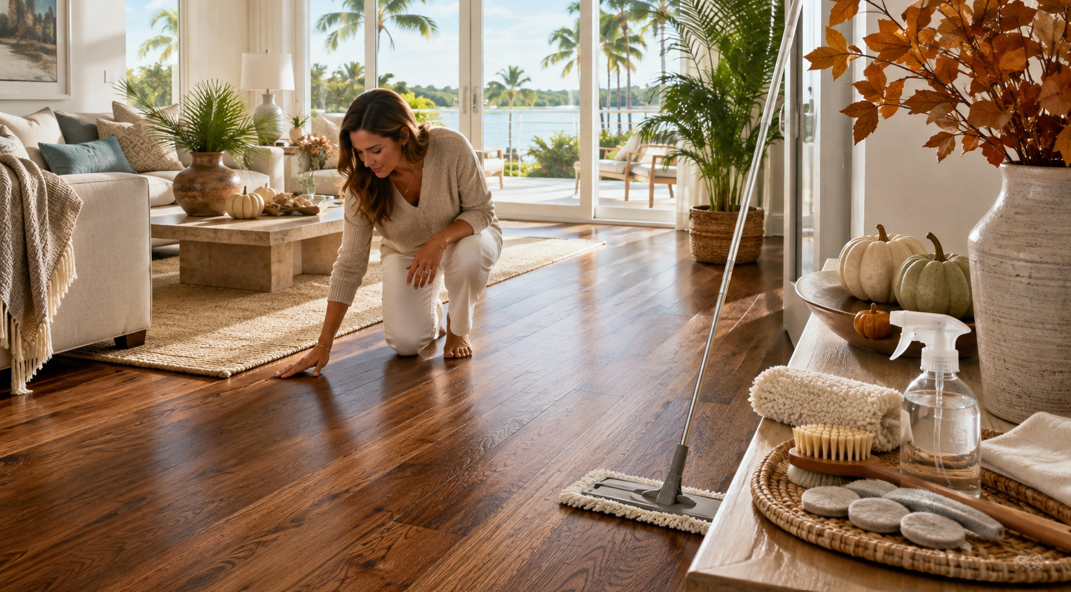
Why Fall Is a Smart Time to Check Your Hardwood Floors
Fall in Sarasota does not arrive with the same dramatic temperature drop seen in northern states. September can still feel like summer, and the season remains warm, humid, and wet enough that hardwood floors continue to live in an environment where moisture control matters.
National Weather Service climate normals for Sarasota-Bradenton show that September averages about 90.2°F for the high and 74.1°F for the low, with roughly 6 inches of precipitation. October becomes drier, but hurricane season continues through November 30.
That makes fall a useful transition point for hardwood maintenance. You can check how the floor handled summer humidity, look for signs of moisture or finish wear, clean away sand and grit tracked in during rainy months, and prepare the home for holiday visitors.
At LG Kramer Flooring, Sarasota homeowners can get guidance on wood floor care, repairs, refinishing considerations, and new flooring when an existing floor is no longer meeting the needs of the home.
A good fall routine does not need to be complicated. The goal is to keep the floor clean, keep moisture under control, spot changes early, and follow the maintenance instructions for the specific flooring and finish in your home.
Fall Checklist Item 1: Start With a Room-by-Room Floor Inspection
Before reaching for a mop or cleaner, walk through every room with hardwood and look closely at the floor in good natural light.
Summer can leave behind more than visible dirt. Frequent rain, wet shoes, pets coming indoors, higher indoor humidity, strong sunlight, and heavier use can all affect how a wood floor looks.
Look for Changes in the Boards
Pay attention to:
New gaps between boards
Raised edges
Boards that appear crowned or cupped
Areas that move or sound different underfoot
Loose or damaged boards
Discoloration
Darkening near exterior doors
Changes around kitchens, windows, or plumbing fixtures
Wood naturally responds to moisture in its environment. NWFA guidance emphasizes keeping environmental conditions consistent throughout the year to help minimize movement as wood gains or loses moisture.
A small seasonal change does not automatically mean the floor has failed. Persistent or severe changes, especially when paired with dampness, staining, or a known leak, deserve closer attention.
Check the Finish
Look across the floor from different angles.
Areas that appear dull, scratched, worn through, or noticeably different from surrounding boards may be showing finish wear rather than damage to the wood itself.
Pay particular attention to:
Main walking paths
Areas near sofas and dining chairs
Kitchen work zones
Entryways
Hallways
Pet feeding areas
Spaces beneath rolling office chairs
Catching finish wear before bare wood becomes exposed can give a flooring professional more options for maintenance.
Fall Checklist Item 2: Remove Sand, Grit, and Everyday Debris
Sarasota living means sand and fine outdoor debris have a way of finding their way inside.
Those particles may look harmless, but repeated foot traffic can grind grit across a finished wood surface. Over time, that can contribute to scratching and a dull appearance.
NWFA care guidance recommends frequent dry sweeping or dust mopping to remove fine and larger particles before they are ground into the floor. It also recommends using a vacuum set for hard surfaces rather than a carpet beater bar.
Give High-Traffic Areas Extra Attention
Focus on areas near:
Front doors
Garage entrances
Sliding doors
Patios and lanais
Kitchens
Hallways
Stair landings
Use a clean microfiber or manufacturer-approved dust mop. If you vacuum, use a hard-floor setting and make sure any rotating carpet brush is switched off when the equipment allows it.
Clean Entry Mats Too
A dirty entry mat can stop doing its job effectively.
Vacuum, shake out, or clean mats according to their care instructions. Make sure they are completely dry before putting them back on hardwood.
Avoid leaving damp mats or wet towels sitting on wood. They can hold moisture against the surface longer than a quick spill would.
Fall Checklist Item 3: Review Indoor Humidity After the Rainy Season
Humidity is one of the most important seasonal considerations for hardwood in Sarasota.
Sarasota County describes the local climate as humid subtropical, with hot, humid summers, warmer drier winters, and a rainy season extending through much of the year. More than half of local annual rainfall occurs from June through November.
The important number for your flooring, however, is the environment inside the home.
Keep Conditions Consistent
NWFA guidance stresses the importance of a consistent environment throughout the year because wood changes as it gains and loses moisture. The association recommends following the flooring manufacturer’s requirements for temperature and relative humidity rather than relying on one universal setting for every product.
For general indoor moisture control, the EPA recommends keeping indoor relative humidity between about 30% and 50% when possible.
A small digital humidity meter can help you understand what is actually happening inside the home instead of guessing based on outdoor weather.
Watch for Signs of Excess Moisture
Take note if you see:
Condensation on windows
Repeated dampness near doors
Musty odors
New floor movement after storms
Water stains
Damp baseboards
HVAC drain problems
The EPA recommends addressing moisture sources promptly and keeping indoor humidity under control because persistent dampness can support mold growth.
Fall Checklist Item 4: Clean With Less Water, Not More
Wood floors do not need to be soaked to become clean.
NWFA care guidance recommends regular damp mopping with a slightly moistened, well-wrung mop so the amount of moisture left on the surface stays minimal. It also recommends using cleaning products approved by the flooring or finish manufacturer.
Skip the Bucket-and-Flood Approach
Avoid leaving puddles or a heavy film of cleaning solution across the floor.
A practical fall clean can follow this order:
Dry mop or vacuum loose grit first.
Treat small spots according to the flooring manufacturer’s directions.
Damp mop with minimal moisture.
Work in manageable sections.
Wipe up any remaining liquid promptly.
Allow the floor to dry before replacing rugs.
Avoid Random Household Cleaning Products
More cleaner does not mean more protection.
Products that leave waxy residue, oil, soap film, or other coatings can change the appearance of a finish and may create problems when the floor later needs professional recoating.
NWFA specifically warns that non-recommended cleaning products can affect the intended appearance of the finish and may interfere with finish adhesion during future maintenance.
If you do not know what finish is on the floor, a wood flooring professional can help identify it and recommend an appropriate cleaning approach.
Fall Checklist Item 5: Check Doorways Before Holiday Traffic Increases
Fall leads directly into one of the busiest times of year for many Sarasota homes.
Family gatherings, holiday parties, visiting relatives, and seasonal entertaining can mean more shoes, chairs, luggage, pets, and movement across the floor.
A little preparation can reduce unnecessary wear.
Upgrade the Entry Routine
Consider:
Clean, dry mats at exterior doors
A practical place for wet umbrellas
A spot for damp shoes
Towels for pets coming in after rain
Regular sweeping near entrances
Mats can help capture grit and moisture before they spread across the hardwood, but choose products suitable for the flooring and avoid rubber or other backings if the flooring manufacturer advises against them.
Check Furniture Pads
Inspect the protective pads under chairs, tables, sofas, and other furniture.
Pads can wear down, collect grit, or shift out of position. Replace damaged or missing pads before holiday furniture starts moving more often.
For dining chairs, check every leg. One exposed or gritty furniture foot can create repeated marks in the same area.
Fall Checklist Item 6: Look for Sunlight and Fading Patterns
Florida sunlight remains strong well beyond summer.
Wood flooring can change color over time due to natural aging and exposure to light. Rugs and furniture can make these changes more noticeable because they block light from some sections while leaving others exposed.
Check Under Rugs and Furniture
Lift area rugs and look at the surrounding flooring.
If you notice a color difference, it does not automatically mean the wood is damaged. Natural wood species and finishes can change in appearance as they age and respond to light.
To help the floor age more evenly, consider periodically adjusting rugs and movable furniture where practical.
Window coverings can also help manage direct sunlight during the brightest parts of the day.
Do not use a harsh cleaner, stain, or abrasive method in an attempt to “correct” ordinary color change without first knowing what type of wood and finish you have.
Fall Checklist Item 7: Address Spills and Leaks Quickly
A maintenance routine cannot prevent every spill, plumbing problem, or storm-related leak.
What matters is how quickly the source is addressed.
NWFA care guidance recommends wiping up spills immediately to help prevent damage from standing liquid.
The EPA similarly advises acting quickly after leaks or spills and drying wet or damp materials within about 24 to 48 hours when possible.
Pay Attention After Heavy Rain
Because September and October remain within Atlantic hurricane season, check vulnerable areas after major weather events even if the home appears fine at first glance.
Look near:
Sliding doors
Exterior walls
Windows
Roof-leak areas
Appliances
Plumbing fixtures
HVAC equipment
If boards become cupped, buckled, stained, or loose after water exposure, avoid rushing into sanding or cosmetic repair before the moisture source and flooring conditions are properly evaluated.
Fall Checklist Item 8: Decide Whether the Finish Needs Professional Attention
Routine cleaning and finish maintenance are not the same thing.
If your hardwood has lost its luster or high-traffic areas are showing visible finish wear, fall can be a good time to ask whether professional maintenance is appropriate before holiday activity increases.
NWFA guidance notes that when a floor loses its luster, it may be time for a maintenance coat. The appropriate treatment depends on the finish system and floor condition.
Cleaning Cannot Repair Finish Wear
A deeper clean may remove soil, but it cannot replace finish that has worn away.
Signs that may justify a professional evaluation include:
Persistent dullness after proper cleaning
Fine scratches throughout traffic areas
Uneven sheen
Finish worn thin in specific locations
Small damaged areas that keep collecting soil
Homeowners considering repairs, refinishing, or new hardwood flooring can benefit from having the existing floor evaluated before assuming complete replacement is necessary.
Depending on the product and finish, professional maintenance may preserve a floor that still has plenty of useful life.
Fall Checklist Item 9: Do Not Ignore Changes Between Rooms
Connected hardwood areas can reveal useful clues about the home.
For example, if the floor looks stable in a bedroom but shows repeated changes near a sliding door, kitchen, or exterior wall, that pattern may point toward a localized environmental or moisture issue rather than a whole-house flooring problem.
Walk through transitions and compare:
Board movement
Finish wear
Color
Gaps
Moisture-prone locations
Changes around thresholds
Also inspect quarter round, baseboards, and transitions. Staining or swelling around trim may provide an early clue that water has reached an area even when the center of the floor looks normal.
A professional evaluation becomes especially valuable when a change is new, worsening, or concentrated around a known water source.
Fall Checklist Item 10: Prepare a Simple Care Routine for the Rest of the Year
The best hardwood maintenance plan is one you can realistically keep using after the seasonal deep clean is finished.
A simple Sarasota routine might include:
Dry mop or vacuum grit regularly.
Use only hard-floor-safe vacuum settings.
Wipe spills promptly.
Damp mop with minimal moisture.
Follow the flooring or finish manufacturer’s cleaning instructions.
Keep indoor conditions as consistent as practical.
Watch for leaks and condensation.
Keep entry mats clean and dry.
Maintain furniture pads.
Recheck busy areas before and after holiday gatherings.
Ask a flooring professional about visible finish wear or unusual board movement.
NWFA recommends establishing a regular cleaning regimen and adjusting maintenance to the floor, finish, use, and household lifestyle.
That last point matters. A quiet Sarasota condo used seasonally does not need exactly the same care schedule as a busy family home with pets, children, frequent guests, and doors opening onto a pool area.
Give Your Sarasota Hardwood a Fresh Start for Fall
Fall hardwood maintenance in Sarasota is less about preparing for cold weather and more about transitioning out of the wettest, hottest part of the year while staying ready for continued storms and holiday activity.
Start by inspecting the boards and finish. Remove sand and grit. Check indoor humidity. Clean with minimal moisture and products appropriate for the floor. Inspect mats and furniture pads, watch vulnerable areas after heavy rain, and pay attention to changes that ordinary cleaning cannot correct.
Most importantly, treat unusual movement, water staining, persistent dullness, or finish wear as information. A floor does not need to look brand new every day, but changes can tell you when routine care is enough and when professional attention may help protect the investment.
LG Kramer Flooring has served homeowners throughout Sarasota and surrounding Florida communities since 2009, with experienced flooring professionals and NWFA-certified installers who understand the relationship between wood, moisture, installation, and long-term care.
If your hardwood needs professional evaluation, repair guidance, refinishing advice, or you are considering an update before the end of the year, reach out to us at LG Kramer Flooring to discuss the right next step for your Sarasota home.


